Floodplain restoration: Largest oxbow lake in Lower Oder Valley National Park to be reconnected
In Lower Oder Valley National Park, the largest cut-off oxbow lake on the Hohensaaten-Friedrichsthal Waterway is being reconnected to the main river. This will allow the National Park Administration to restore a more natural state to the human-altered floodplain landscape of the lower Oder. The national park is located in northeastern Brandenburg, directly on the German-Polish border. The floodplain landscape of the lower Oder Valley is the heart of the national park. The narrow valley with the adjacent Oder slopes is the only river floodplain national park in Germany.
Planning for the restoration measure was carried out in cooperation between the Brandenburg Nature Conservation Fund Foundation and the National Park Administration. The construction measure is being implemented by the Brandenburg State Office for the Environment (LfU) as a compensatory and replacement measure for the outlet structure at Wrech, which has already been refurbished in the national park. The construction work will begin after the end of the breeding season and is expected to be completed by the end of September.
Improving habitat conditions as the goal
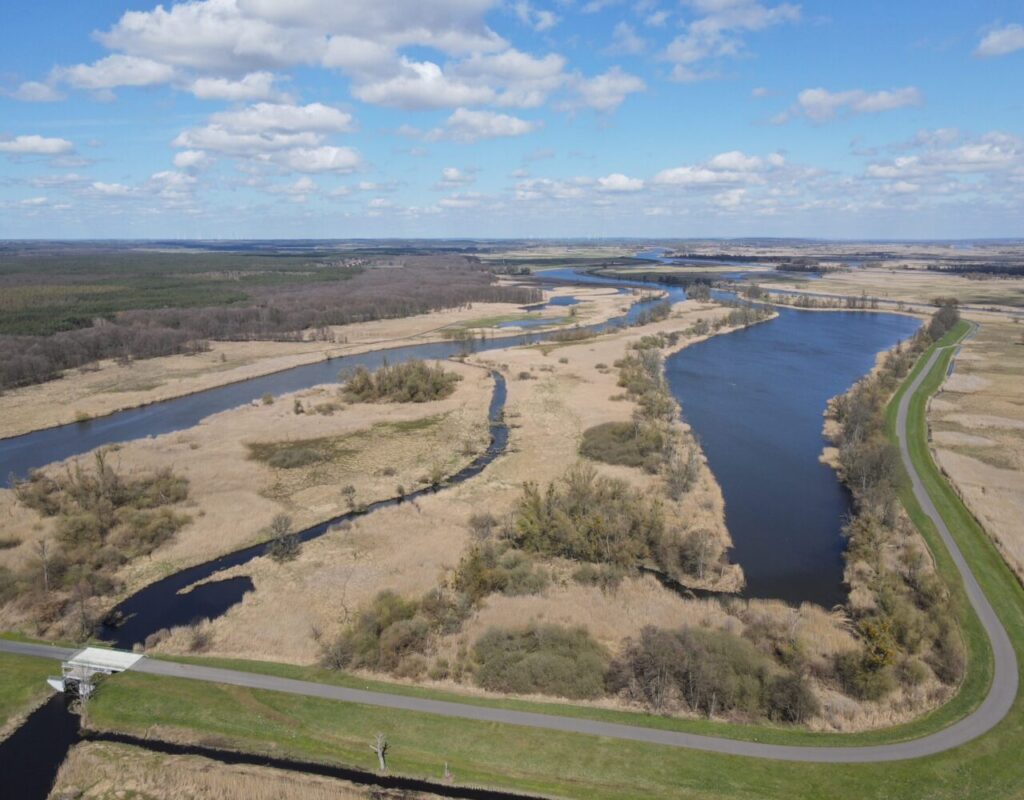
The “Welsensee” oxbow lake is located near Teerofenbrücke, south of Friedrichsthal. The Oder oxbow lake, which until now has only been connected on one side to the Hohensaaten-Friedrichsthal Waterway, will once again be fully flushed through by a cut-through. The main objective of the planned project is a permanent, two-sided connection of the former waterbody “Welsensee” to the federal waterway and polder waters. This will significantly improve habitat conditions for floodplain-typical animals and plants, and ecological connectivity will be restored. Occurrences of fish species such as asp and spined loach have been documented in the waterbody. Also with regard to the permanent opening of Polder 10 planned by the National Park Administration, hydrological conditions will continue to improve through more frequent flow-through in the oxbow lake.
By implementing this project from the national park plan, a habitat that is specially protected under the European Union’s Habitats Directive (Fauna-Flora-Habitat Directive) will be enhanced. The habitat design will have positive effects, among other things, for migratory animal species, while also counteracting the increasing silting up of the oxbow lake. A new island will be created for this purpose, intended to serve as an undisturbed refuge for animal and plant species such as beavers and white-tailed eagles.
How the oxbow lakes have changed over time
Up until the 18th century, the Oder meandered here in several branches through what is now the national park. With the expansion of the Hohensaaten-Friedrichsthal Waterway around 1910, the oxbow lake was cut off. Old water connections have increasingly silted up. These connections will be restored as part of the measure.